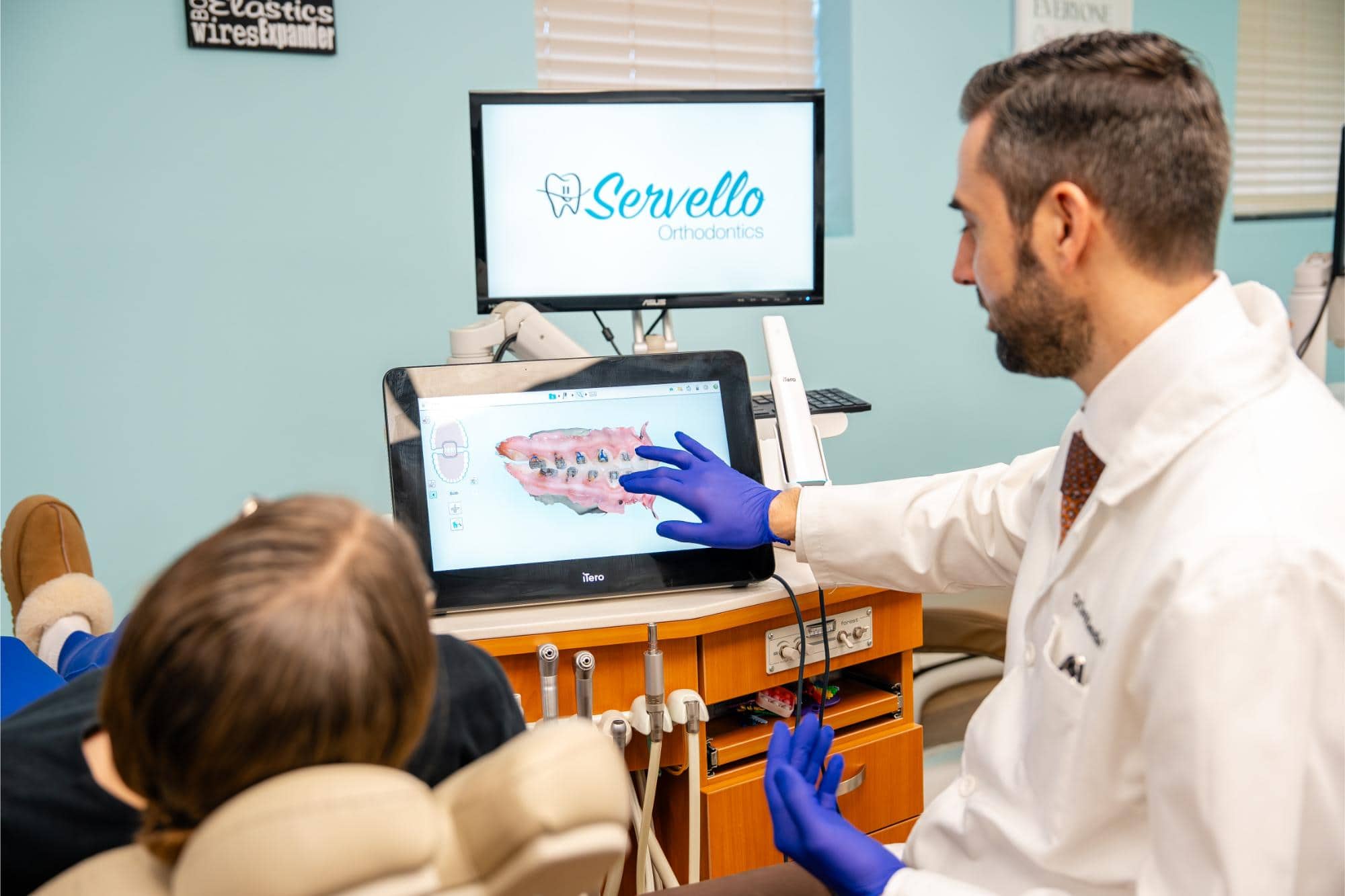
If your family dentist mentioned braces before all the baby teeth are gone, you probably had questions. Here’s a plain-language guide to early orthodontic treatment, covering what it does, how long it lasts, what drives the cost, and when simply watching and waiting is the smarter call.
What Is Phase 1 (Early) Orthodontic Treatment?
Phase 1 orthodontic treatment, also called interceptive treatment, is limited early care for children roughly ages 6 to 10, while baby teeth and permanent teeth are both present in the mouth. The goal is guiding jaw growth and creating room for teeth that haven’t come in yet, not perfectly straightening every tooth.
That distinction matters. Phase 1 fixes the foundation. Phase 2, if it’s needed later, handles the finish work.
According to the American Association of Orthodontists, kids should have an initial orthodontic screening at age 7. By that age, the first permanent molars and front teeth are usually in place, which gives a board certified specialist in orthodontics and dentofacial orthopedics enough information to spot a crossbite, a developing underbite, or a serious space shortage.
At Servello Orthodontics, that first screening for early orthodontic treatment is a free consultation, and it very often ends with a recommendation to keep watching rather than to start anything.
Keep in mind that early evaluation is rarely followed by early treatment. In most cases we monitor your child’s growth patterns until the ideal time for treatment to begin.
When Phase 1 is recommended, active treatment typically runs about 9 to 18 months, followed by a resting period while the rest of the permanent teeth erupt.
Appliances used during Phase 1 usually include:
- Palatal expander to widen a narrow upper jaw and correct crossbites
- Partial braces on a few key teeth to move or upright them
- Space maintainers to hold room open when a baby tooth is lost early
- Habit appliances to help stop thumb sucking or tongue thrusting
- Removable retainers to hold the correction until Phase 2 begins
How Phase 1 and Phase 2 Work Together
Two-phase orthodontic treatment splits care into two active stages separated by a resting period in between. Phase 1, between roughly ages 6 and 10, corrects skeletal and space issues while your child is still growing. A resting period follows while the remaining permanent teeth come in. Phase 2, usually in the early teens, aligns and details the bite.
Think of it as three chapters, not two.
Phase 1: build the foundation
We widen narrow arches, correct crossbites and underbites, hold space for teeth that haven’t erupted, and stop habits that push teeth out of position. Appliances come off once the growth-related correction is done.
The resting period: watch and wait
This stage often lasts one to three years. Your child comes in for short observation visits every six to twelve months so we can track eruption patterns and take periodic X-rays. Nothing is glued on. Many kids wear a simple retainer during this time.
Phase 2: finish the alignment
Full braces or Invisalign clear aligners move every permanent tooth into its final position and refine how the upper and lower teeth meet. Phase 2 usually takes 12 to 24 months, depending on what’s left to correct.
Retention: protect the result
Retainers follow Phase 2 and are worn long term. Teeth shift throughout life, and retainers are what keep a beautiful, confident smile looking the way it did the day the braces came off.
| Stage | Typical Age | Main Goal | Common Appliances | Duration |
|---|---|---|---|---|
| Phase 1 | 6 to 10 | Guide jaw growth, create space, correct crossbites | Expander, partial braces, space maintainer, habit appliance | 9 to 18 months |
| Resting period | 9 to 12 | Monitor eruption of permanent teeth | Retainer or no appliance | 1 to 3 years |
| Phase 2 | 11 to 14 | Align all teeth, detail the bite | Full braces, clear ceramic braces, or Invisalign clear aligners | 12 to 24 months |
| Retention | After Phase 2 | Hold results long term | Fixed or removable retainer | Ongoing |
Key Benefits of Starting Orthodontic Treatment Early
Early treatment is worth doing when it accomplishes something that can’t be done later. Growth is the reason. Once puberty passes, the jaws stop responding to gentle guidance the way they do at age eight.
Here’s what Phase 1 can do while that window is open:
How Does Early Treatment Guide Jaw Growth and Create Space?
- Guides jaw growth. A narrow upper jaw can be widened comfortably in a growing child. Later on, correcting the same skeletal width becomes far more involved.
- Reduces crowding severity. Creating arch space early gives incoming permanent teeth somewhere to go, which in some cases lowers the likelihood that permanent teeth will need to be removed later.
- Corrects crossbites and underbites sooner. Left alone, these bites can push the jaw to grow unevenly and lead to noticeable facial asymmetry.
Expanders are among the most predictable appliances we use at this age when the upper jaw is genuinely narrow, largely because the bones of the palate have not yet fused.
What Everyday Benefits Do Kids and Parents Notice?
- Protects front teeth from injury. Upper front teeth that flare forward take the brunt of playground falls and sports contact. Bringing them back in line lowers that risk.
- Improves everyday function. Chewing gets easier, breathing patterns can improve, and speech sounds affected by tongue position often clear up.
- Supports confidence at a sensitive age. Second and third grade is when kids start noticing each other’s teeth. Fixing something obvious early can change how a child feels about smiling in photos.
There’s a practical benefit too. Kids who finish Phase 1 arrive at Phase 2 with a simpler correction ahead of them, which often means a shorter, more straightforward stretch in braces during the busy middle school years.
Phase 1 vs. Waiting for One-Phase Treatment in the Teen Years
Most children do not need two phases. Single-phase treatment starting around ages 11 to 13, once the permanent teeth are in, handles mild to moderate crowding and spacing very well. Two-phase treatment is reserved for skeletal and growth-related conditions that get harder to correct as a child gets older.
| Two-Phase (Phase 1 + Phase 2) | Single-Phase (Teen Years) | |
|---|---|---|
| Ideal starting age | 6 to 10 | 11 to 13 |
| Active treatment time | 9 to 18 months, then 12 to 24 months | 12 to 24 months |
| Primary goal | Guide growth first, then align teeth | Align teeth and correct the bite in one stage |
| Typical appliances | Expander, partial braces, then full braces or Invisalign clear aligners | Full braces, clear ceramic braces, or Invisalign clear aligners |
| Total investment | Higher, billed in two separate stages | Lower, billed once |
| Best candidate | Crossbite, underbite, narrow jaw, severe crowding, harmful habits | Mild to moderate crowding, spacing, or minor bite issues |
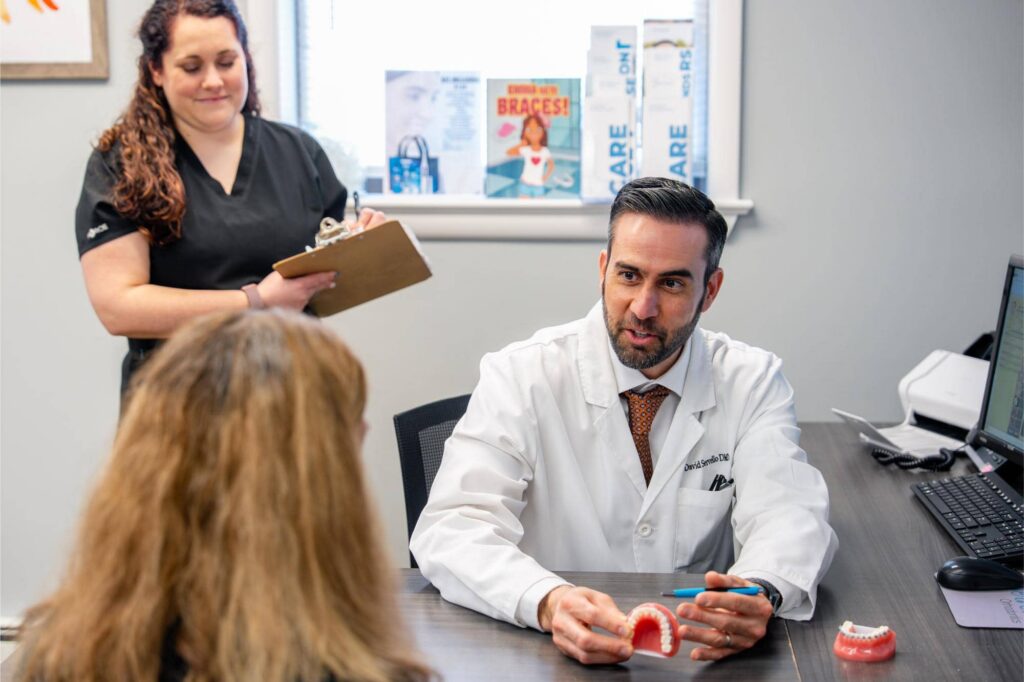
The trade-offs are real, and a board certified specialist in orthodontics and dentofacial orthopedics will go through each of them with you openly at your free consultation.
Two-phase care stretches the overall treatment window across several years and adds visits, retainers, and a second round of fees. What you get in return is a growth correction that can only happen during childhood, plus a Phase 2 that’s usually simpler.
Waiting has advantages of its own: one set of fees, one course of treatment, and a child old enough to handle their own brushing and elastics.
Not every child needs Phase 1. When there’s nothing growth-related to correct, the right recommendation is observation, and we’ll tell you that plainly.
Dr. David Servello, DMD, is a board certified specialist in orthodontics and dentofacial orthopedics, certified by the American Board of Orthodontics and a member of the American Association of Orthodontists. His background also includes graduating in the top 10 of his dental school class, induction into the Omicron Kappa Upsilon honor society, an American College of Dentists award, and service in the U.S. Air Force. Growth timing is one of the trickier calls in orthodontics, and that training is exactly what it’s for.
How Much Does Phase 1 Treatment Cost?
There’s no single number, because Phase 1 cost depends on three things: the appliance your child needs, how long treatment lasts, and how complex the correction is. A single expander worn for several months sits at the lower end. Combining an expander with partial braces, a habit appliance, and a retainer costs more because it involves more chair time.
Specific factors that move the number:
- Appliance type. Expanders, partial braces, space maintainers, and habit appliances each carry different costs.
- Number of appliances. Some children need one. Others need two or three in sequence.
- Treatment length. Nine months of care costs less than eighteen.
- Retention during the resting period. Retainers get replaced as kids grow and, occasionally, as they get lost.
- Visit frequency. Expander turns and adjustments typically bring you in every four to eight weeks.
Two billing details are worth asking about before you start. First, Phase 2 is quoted and billed separately, so ask directly how Phase 1 fees factor into the total two-phase investment. Second, orthodontic insurance benefits are usually written as a lifetime maximum per person, not an annual one, which means dollars used during Phase 1 reduce what’s available for Phase 2.
Financing options, monthly payment plans, and FSA or HSA dollars all help spread the cost out over time rather than all at once. Free consultations at Servello Orthodontics include the exam and the records needed to know whether early treatment is necessary in the first place, at no charge to your family either way.
What Are the Signs a Child Needs Early Orthodontic Treatment?
The signs that most often point toward early treatment are a crossbite, an underbite, severe crowding, and upper front teeth that flare noticeably forward. Baby teeth lost much earlier or much later than expected, mouth breathing, thumb sucking past age 5, and a jaw that shifts to one side belong on the same list.
Parents often spot these signs before anyone else does. Run through the list and see what sounds familiar:
- Crossbite. Upper teeth bite inside the lower teeth on one or both sides.
- Underbite. The lower jaw and lower front teeth sit ahead of the upper front teeth.
- Severe crowding. Permanent teeth are coming in twisted, overlapped, or clearly short on space.
- Protruding upper front teeth. They flare forward and don’t cover the lower teeth properly.
- Baby teeth lost very early or very late. Both patterns can throw off eruption of the permanent teeth.
- Trouble chewing or biting. Food gets avoided, or your child bites the cheek or roof of the mouth.
- Mouth breathing. Especially noticeable during sleep, along with snoring or restless nights.
- Thumb sucking past age 5 or prolonged pacifier use. Sustained pressure reshapes the growing upper jaw.
- A jaw that shifts or clicks. Watch as your child closes; the jaw may slide to one side to make the teeth meet.
- An off-center facial midline. The front teeth don’t line up with the center of the face.
- Impacted or blocked-out permanent teeth. These show up on a panoramic X-ray long before they show up in the mirror.
If none of these apply, that’s good news, and an orthodontist may simply track your child’s growth every six to twelve months at no cost until the right moment arrives.

Frequently Asked Questions About Phase 1 Orthodontics
At what age should my child first see an orthodontist?
Age 7 is the recommendation from the American Association of Orthodontists. Enough permanent teeth have usually erupted by then to reveal crossbites, crowding, and jaw growth patterns that aren’t visible earlier. An evaluation at 7 doesn’t mean braces at 7. Most children are simply monitored until the ideal time.
How long does Phase 1 treatment take?
Active Phase 1 treatment usually lasts 9 to 18 months, depending on the appliance and what’s being corrected. An expander alone may finish on the shorter end. Adding partial braces or a habit appliance extends things. After that comes the resting period, with brief check-in visits while the remaining permanent teeth come in.
Will my child still need braces after Phase 1?
Usually, yes. Phase 1 corrects growth and space issues; it doesn’t straighten every permanent tooth, because most of them haven’t arrived yet. Plan on Phase 2 with full braces or Invisalign clear aligners in the early teens. The upside is that Phase 2 is often shorter and simpler than it would have been otherwise.
Does Phase 1 treatment hurt?
Kids typically report pressure and tenderness for a few days after an appliance is placed or adjusted, nothing sharp. Soft foods and an over-the-counter children’s medicine handle it well. Expander turns feel like brief pressure across the roof of the mouth. Most children adapt within a week and forget the appliance is there.
Can we just wait until all the permanent teeth come in?
Sometimes waiting is exactly right, and we’ll say so. For crossbites, underbites, narrow jaws, and harmful habits, though, waiting means losing the growth that makes correction gentle. Those conditions tend to become more involved, not less, once the growth plates settle after puberty.
Can Invisalign be used for early treatment?
Invisalign First aligners can work for some younger children with limited alignment needs and good cooperation. Skeletal corrections like widening a narrow upper jaw still call for a fixed appliance such as an expander. At your free consultation, the team at Servello Orthodontics will walk through which option fits your child’s bite, age, and daily routine.
Create habits that will last a lifetime. Start dental visits early.
An early evaluation is one of the easiest things you can check off your list, and it costs you nothing. Servello Orthodontics welcomes kids, teens and adults at our offices, where we provide orthodontic solutions tailored to suit each patient’s lifestyle. Learn more about early treatment, or make an appointment whenever the timing feels right for your family. We look forward to seeing you smile!